
Our Horseshoe Crab Model Limulus polyphemus is a rich olive brown and features a hard epoxy carapace, cephalothorax and a telson (or tail) which is attached with a quick release buckle for easy transport. It is about 2 and half foot around by about 4 feet long with a heavy duty carrying case, vinyl claws, feathery gills and soft sculpture internal organs. Horseshoe crabs have a complicated circulatory system with a long tubular heart, muscles, gills, digestive gland, crop, gonads and a brain wrapped around their mouth.
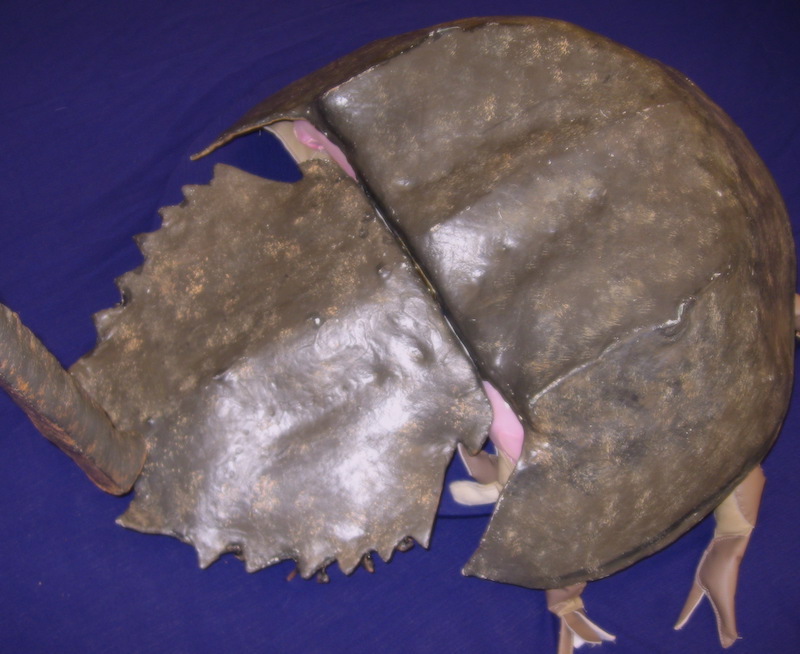
Third Realm’s Horseshoe Crab Model 
Flip it over see the legs and feathery book gills 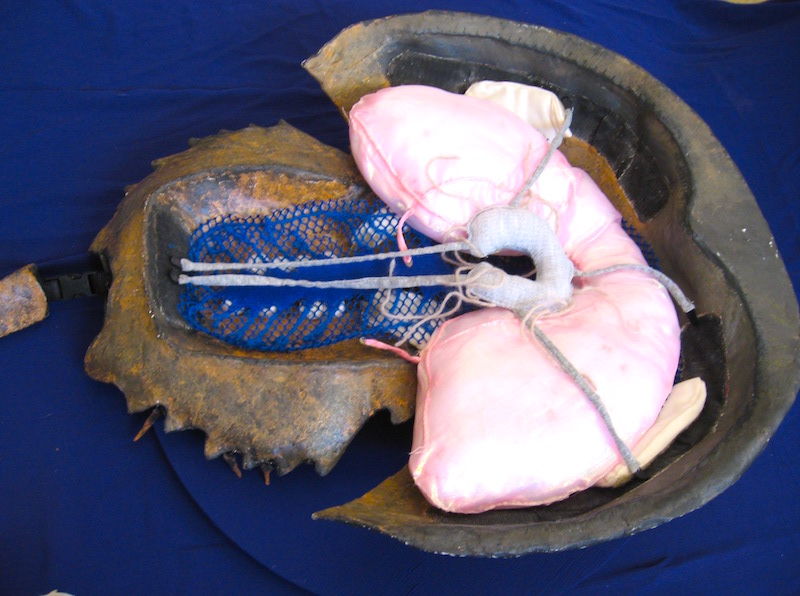
Under the legs find the blue circulatory system and the grey brain 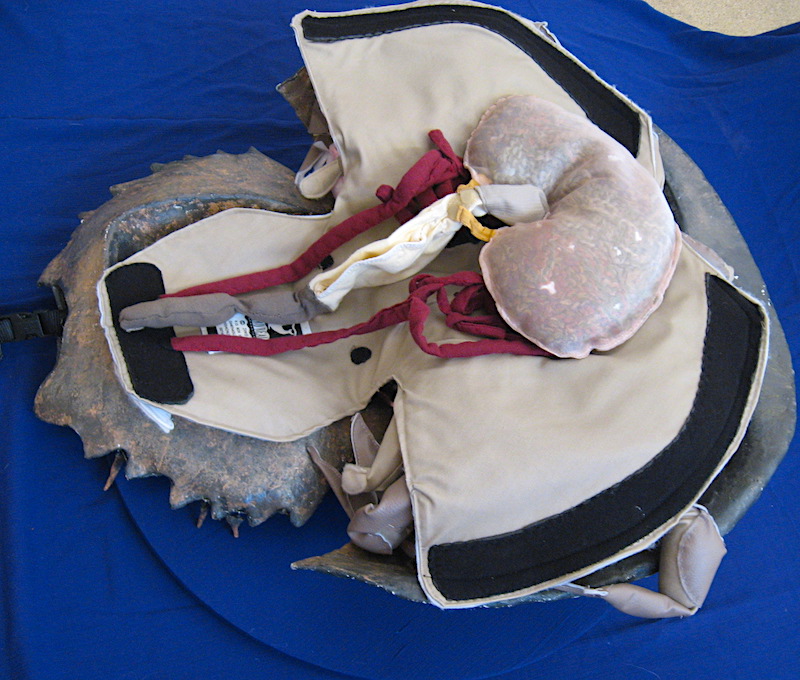
Next, the digestive system 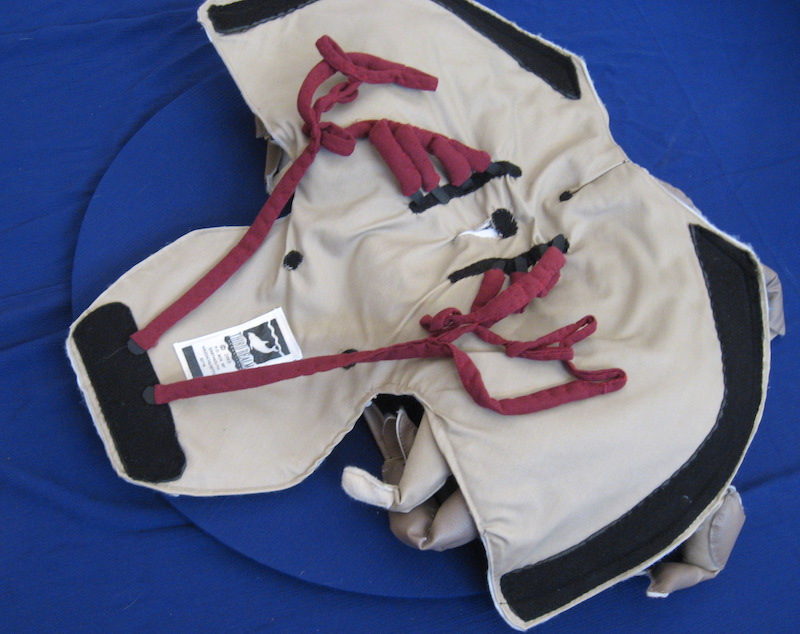
And tucked uner the carapace, the coxal gland ( like a kidney)
The Horseshoe crab Limulus polyphemus is one of the most interesting animals you might find along the seashore. First, it is not a true crab at all, but more closely related to spiders and scorpions. It is also called a “living fossil” and has been swimming in shallow seas since Triassic times. Horseshoe crabs have numerous simple eyes (called photoreceptors) along the edge of their shells and telsons and two larger compound eyes on either side of their carapace. Horseshoe Crabs feed on sea worms and young clams and grind them up in their “crop” as they walk along muddy ocean bottoms. At night, on a spring high tide, they crawl out of the sea to mate and lay their eggs in the wet sand. These eggs are a very important food source for many types of migrating shorebirds.
But Horseshoe crabs are in danger. We are building along the waters’ edge, we overfish them for use as bait and harvest too many for medical research (their blood contains a unique clotting agent). We are having a devastating impact on the this “living fossil”.
And, unlike what many children might suppose, they do not use their tail as a weapon! Nor will they hurt you! Horseshoe crabs use their telson to flip themselves back over should they get overturned by the waves. Please, be careful of Horsecrabs and do not pick them up by the tail,